Young Lions will be virtual, but with an option for winners to attend the festival

The winning teams of the 2022 U.S. Young Lions competitions have been announced, with teams from BBDO and Havas, McKinney, Initiative and Healix Global, Weber Shandwick, Giant Spoon and T-Mobile taking the top spots.
Those teams will compete virtually as Team USA in the global Young Lions competition in May, prior to the 68th Cannes Lions International Festival of Creativity, which takes place June 20-24.
While Cannes Lions will be held in-person this year for the first time since the pandemic started—the last two years were held virtually, with the 2021 show comprising two years of entries—Young Lions will again be held virtually this year. That doesn’t mean the winners can’t enjoy the south of France during the festival, however. U.S. winners have the option to attend the festival subject to agreement with their festival representative. They have each been invited by the festival team to attend Cannes and learn from the content on stages, the award ceremonies, viewing work and networking opportunities, according to National CineMedia (NCM), the U.S. representative to the Cannes Lions International Festival of Creativity.
International Young Lions winners will be able to attend if Covid-19 protocols from their respective countries are met, so not everyone may be able to go. According to NCM, the festival felt strongly that it needed a level playing field for this global competition. Many people still do not have access to vaccines, cannot travel easily and want to avoid Covid-19 exposure, so a virtual competition was again the best solution.
The challenge
Each year for Young Lions—which is for creatives under age 31—NCM and its executive team issue a theme and challenge for a charity of choice. This year it came from the Leukemia & Lymphoma Society (LLS).
Recently appointed NCM president, sales, marketing and partnerships, Scott Felenstein, has personal experience with a family member impacted by lymphoma and understands the importance of cancer research and patient support when it comes to this disease. When he sought to identify a nonprofit supporting this, LLS rose to the top.
The teams were challenged to develop a creative and innovative campaign in their respective categories that would raise awareness for LLS, a national nonprofit organization that funds blood cancer research around the world, provides free information and support services and is the voice for blood cancer patients. The brief gave the target audience as gaming and social media enthusiasts aged 16-35 to raise awareness and drive donations within this group specifically.
Those who won utilized digital to great advantage, with gaming being a big tool that was used.
The winners
Over 250 entries were submitted this year from teams of young professionals working for advertising, digital, media, creative and PR agencies and in-house marketing teams. The winners were selected by six juries of professionals within each field, and all six winning teams will compete in the festival’s global competitions in May.
The winners were:
- Digital: Jacq Quinton, McKinney LA & Cooper Bowman, McKinney LA
- Film: Hamza Ali, Havas NY & Allyn Scherr, BBDO NY
- Marketer: Amani Seay, T-Mobile & Ally Kretsinger, T-Mobile
- Media: Maureen Cornely, Initiative & Safiya Valiulla, Healix Global (Initiative)
- PR: Jonathan Candelaria, Weber Shandwick & Kristen Izquierdo, Weber Shandwick
- Print: Crystal Thane, Giant Spoon & Alejandro Estrada, Giant Spoon
“What struck us initially was the level of excellence in the submissions coming from a particularly young demographic this year. The creative executions by the print and film/TV teams were particularly inspiring. We were also impressed to see such strategic thinking and insights utilized with the digital, media and PR plans,” Susan Lilley, director, Cannes Programs Consultant, NCM, U.S. representative, told Adweek.
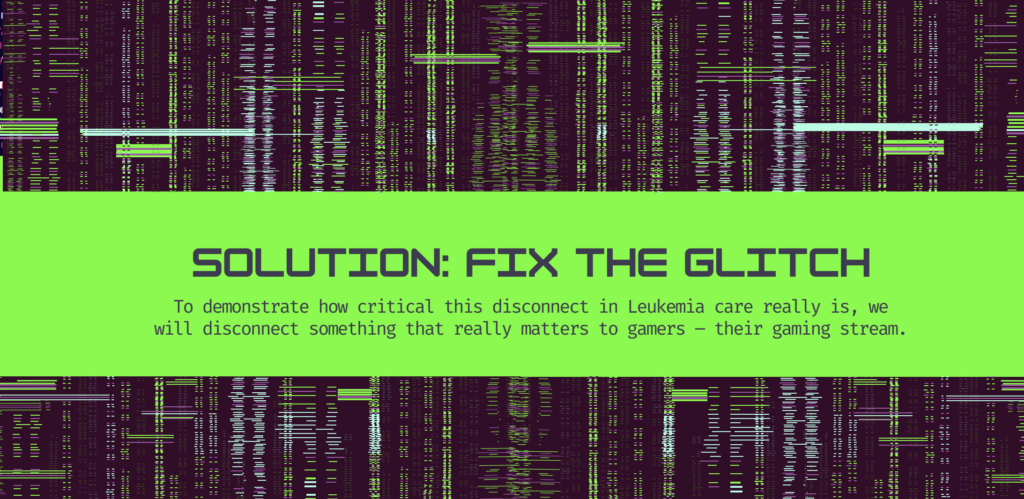
Lilley said the judges felt the first place media plan, “Fix the Glitch,” recognized key gaming insights and developed a good plan to drive awareness and attract donations. The basis was that every gamer hates to have problems or glitches when they are playing. This plan interrupted the game every three minutes—based on a key statistic that blood cancer is diagnosed every three minutes—and then the gamer was prompted to donate to LLS in order to re-start the game.
Donald Mustard, chief creative officer at Epic Games, served on the PR jury panel. He was impressed with the strategic thinking and professional level of the presentation decks by all six finalist teams, including one that used Fortnite in its digital campaign.

The Young Lions US winner in the digital category is from a team from McKinney LA, Cooper Bowman, and Jacq QuintonCannes Lions
The jury was unanimous in its first place choice of “The Rig” which identified a key insight of gamers—their “rig/console” is paramount and especially important in a hospital setting where young cancer patients are going through long days of treatment.

The Marketer competition had teams re-purposing a product within their company to engage the target audience and drive donations to LLS. The T-Mobile team took first place with a plan to utilize the company’s vast streaming capabilities and raise awareness of blood cancer. Their plan was multi-tiered: use the popular Candy Crush game to launch #crushbloodcancer challenge, utilize the T-Mobile Tuesday app and “text to donate” capabilities on Giving Tuesday as well as host LLS learning events in their flagship stores.
The Leukemia & Lymphoma Society team was impressed with many of the entries and some of the entrants may be contacted by the society for further discussion.
“There is a good possibility that we will be reaching out to teams for further discussions and potentially utilizing their ideas and concepts down the road. I have no doubt it will spark new ways of thinking and approaches,” Lynn Godfrey, The Leukemia & Lymphoma Society svp, chief experience officer, told Adweek. The innovation, diversity and professionalism of the young teams impressed me the most. Each and every one of these competitors has a bright future ahead.”


