Hamzat’s Lagos Promise: 100 Pledges, Accountability And A Vision For The Future

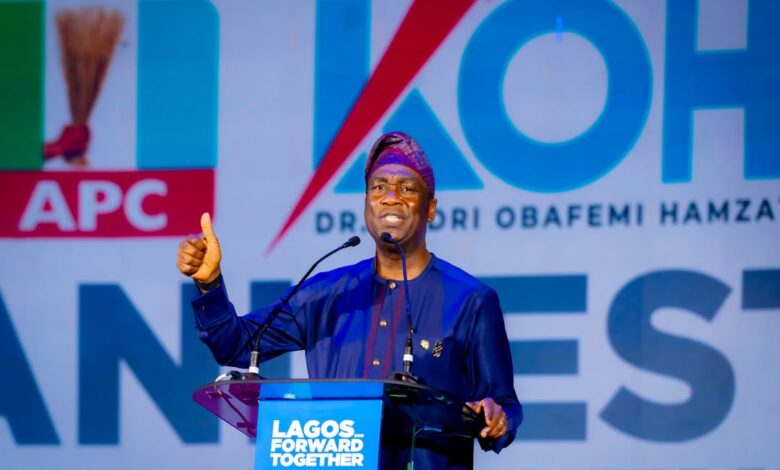
Lagos is a city of movement, ambition and opportunity, but for millions of its residents, everyday life is defined by challenges ranging from traffic congestion and rising living costs to affordable housing, quality healthcare, education and employment. It is against this backdrop that Lagos State Deputy Governor and All Progressives Congress (APC) governorship candidate, Dr Kadri Obafemi Hamzat, has unveiled a development blueprint built around 100 pledges and a promise to make government more accountable to the people.
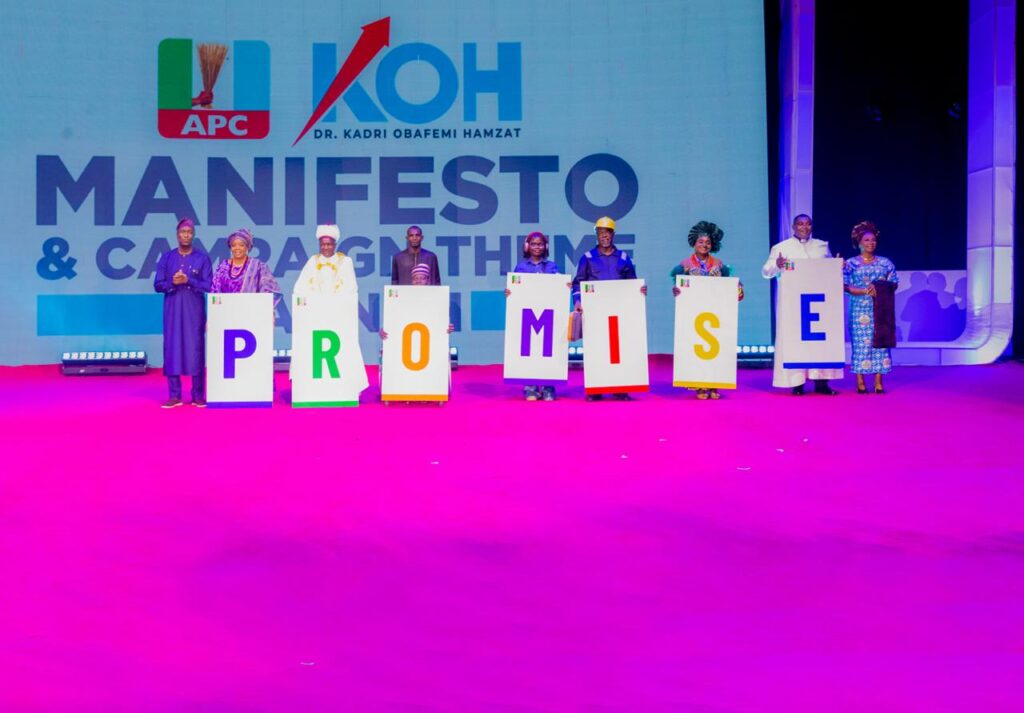
Titled The Lagos Promise: Ileri Eko, the manifesto, unveiled on October 30, 2026, is anchored on the Yoruba expression Gbese ni Ileri, a promise is a debt. Hamzat’s message is that public office comes with an obligation to deliver measurable results, and that government should be judged not by speeches or campaign declarations but by improvements in the daily lives of residents.
Organised around seven pillars, the manifesto addresses human development, economic opportunity, infrastructure, security, environmental sustainability, inclusion and institutional accountability. Its central focus is the ordinary Lagosian: the mother seeking healthcare for her child, the trader opening her shop before dawn, the young graduate looking for work and the commuter spending hours travelling between home and the workplace.
Hamzat draws on his personal history, family background and experience as deputy governor since 2019 to explain his approach to public service. Raised in Mushin, he says his early experiences helped shape his understanding that governance must be reflected in practical improvements within communities. He also presents his ambition as a continuation of Lagos’ development journey, building on the work of previous administrations while addressing the demands of a growing population.
One of the manifesto’s defining proposals is the establishment of a Child Protection and Nutrition Agency. Hamzat says he intends to transmit a bill to the Lagos State House of Assembly within his first 100 days in office to establish the agency. The proposed initiative would focus on ensuring that every child under 18 is either in school or learning a trade and receives adequate nutrition. He also emphasises that every child living in Lagos should have access to protection and opportunity, regardless of family origin, language or religion.
Healthcare features prominently, with plans to increase Maternal and Child Centres from 10 to 15, expand Ilera Eko health insurance coverage and upgrade 100 primary healthcare centres. The manifesto also identifies ongoing hospital projects expected to provide 580 additional beds, alongside proposals for two new general hospitals in Ogombo and Ibeju-Lekki. Hamzat further promises to recruit more healthcare professionals and improve working conditions across the sector.
In education, he proposes strengthening EKOEXCEL, expanding digital learning opportunities and continuing teacher training. He also highlights the role of Lagos State University, Lagos State University of Science and Technology and Lagos State University of Education in expanding access to higher education. His broader commitment is to improve learning outcomes and equip young people with skills relevant to a changing economy.
On jobs and enterprise, Hamzat argues that government must create an environment in which businesses can grow and employ more people. He points to the Lagos State Employment Trust Fund and its reported support for businesses and job creation, while promising simpler business permits, clearer government charges, improved access to credit and opportunities for small businesses to participate in public procurement. A proposed vocational training arrangement would also place students with employers for practical experience, with the state covering part of their stipends.
Transportation, one of the most persistent concerns for Lagos residents, receives extensive attention. Hamzat proposes increasing the public bus fleet from 1,000 to 4,000 vehicles, extending the Blue Line rail service to Okokomaiko and pursuing the Green Line from Marina to the Lekki Free Trade Zone in partnership with the Federal Government. The Omi Eko programme would expand water transport through additional routes, improved terminals and electric vessels. The wider objective is to integrate road, rail and waterways into a connected system that reduces commuting time.
The manifesto also identifies road projects across several parts of the state, including interventions in Ojo, Ikorodu, Badagry, Alimosho, Ikeja and Mushin. Other proposals include advancing the Fourth Mainland Bridge through partnerships and accelerating projects along the Lekki-Epe corridor. In housing, Hamzat promises to complete existing schemes, work with private developers and expand access to mortgages through lower deposits, single-digit interest rates and longer repayment periods.
Security and environmental management are equally prominent. The candidate proposes extending neighbourhood security coverage across the state’s local governments and development areas, expanding street lighting and CCTV infrastructure, and improving coordination among security agencies. He also promises better welfare and training for security personnel, alongside mechanisms for receiving and reviewing complaints about their conduct.
On water and waste management, the manifesto includes completing the Adiyan Phase Two water project, rehabilitating 24 micro and mini waterworks and improving distribution networks. It sets a target of 95 per cent waste collection coverage, while proposing further investment in waste transfer, recovery and waste-to-energy facilities. Environmental measures include tree planting and the development of public parks.
Hamzat’s inclusion agenda identifies initiatives for women, young people and persons with disabilities, while emphasising access to public services and opportunities for everyone who lives in Lagos. The proposals are framed around the state’s diverse population and the contributions of residents from different cultural, religious and ethnic backgrounds.
However, the manifesto’s most distinctive feature may be its proposed accountability framework. Of the 100 pledges, 87 are classified as firm commitments within the control of the Lagos State Government, while 13 are described as aspirations requiring wider consultation, Federal Government cooperation or decisions beyond the state’s direct authority.
Hamzat proposes establishing a Lagos State Service Delivery Office, chaired by the governor, to publish baseline figures and monitor progress against the commitments. The plan also includes Service Charters across government offices, complaint-response timelines of 48 hours for acknowledgement, seven days for an answer and 30 days for resolution, as well as annual public reports comparing promises with actual performance.
The proposed framework is intended to allow residents to assess delivery throughout the administration rather than waiting until the end of a four-year term. Its effectiveness, however, will depend on the transparency of the reporting process, the independence of performance reviews and the willingness of government to explain missed targets.
The Lagos Promise is also presented as a continuation of the state’s development trajectory, recognising the contributions of former governors and the infrastructure and institutions established under successive administrations. Hamzat says continuity must go hand in hand with renewed attention to the changing needs of Lagos, particularly as its population and economic activities expand.
Ultimately, the manifesto is both a development blueprint and an argument for Hamzat’s governorship ambition. Its proposals raise practical questions about funding, implementation timelines, institutional capacity and the coordination required to deliver projects across a complex metropolitan state.
Can expanded public transport reduce commuting times? Will the proposed hospitals be adequately staffed? Can affordable mortgage arrangements bring home ownership closer to ordinary workers? Will the employment initiatives generate sustainable jobs, and will the accountability mechanisms provide residents with reliable information about government performance?
These are the issues against which the 100 pledges will be measured. For Lagosians, the significance of the manifesto will lie not simply in the number of commitments announced but in whether they translate into better roads, accessible healthcare, improved schools, safer neighbourhoods, more affordable housing and a government that responds to citizens.
Hamzat’s central message is captured in the phrase that gives the manifesto its identity: Gbese ni Ileri. A promise is a debt, and the people are entitled to demand accountability for it. The ultimate test of The Lagos Promise will be whether the commitments made today become visible improvements in the lives of those who keep Lagos moving.
